The Content Juggler's Dilemma: Why Multi-Platform Presence Is Breaking Thought Leaders
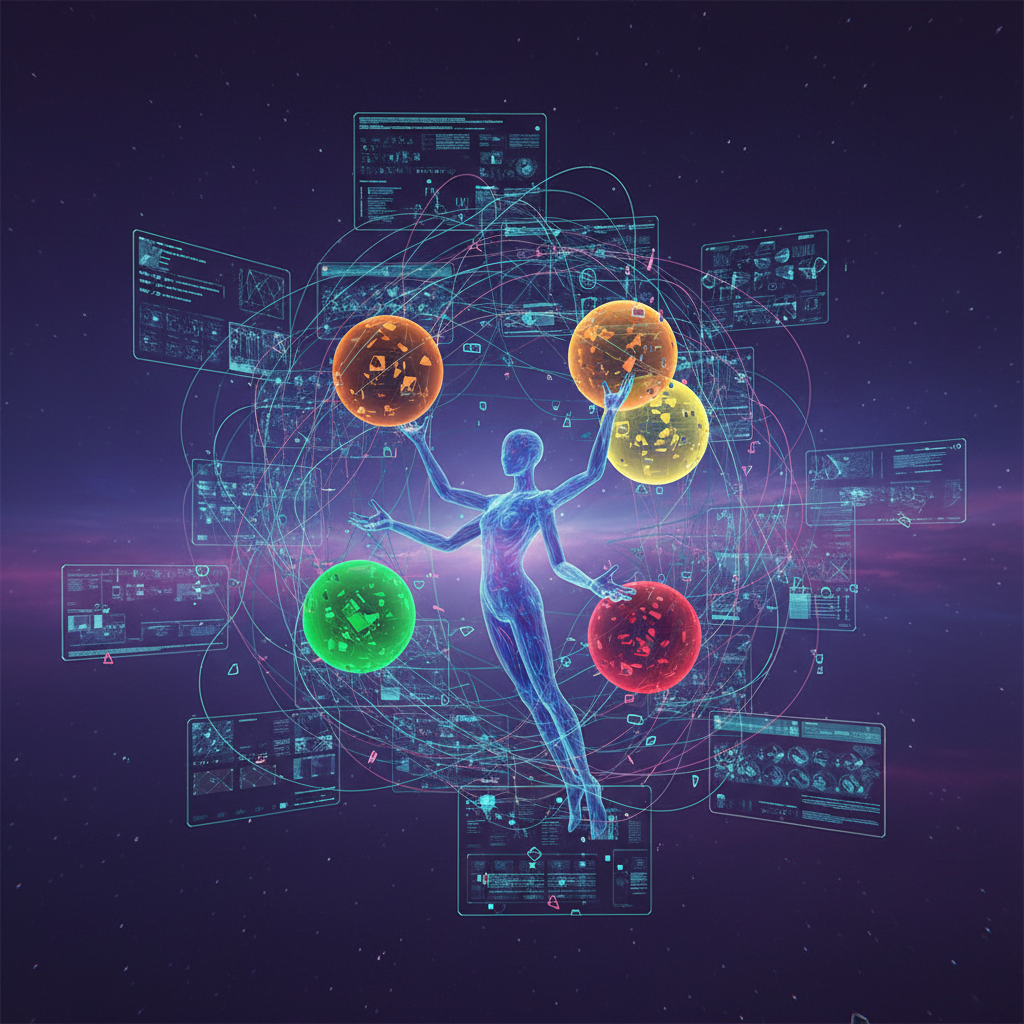
Here's what's expected of modern thought leaders. LinkedIn demands professional insights, article-length posts, and carousel documents. Twitter wants quick takes, threads, and real-time engagement. YouTube requires long-form video with optimized thumbnails and SEO-driven strategy. Instagram expects Stories, Reels, and polished visuals. TikTok needs vertical video, trend participation, and raw authenticity. Your podcast needs weekly episodes, show notes, and guest coordination. Your newsletter requires curated insights, personal voice, and consistent delivery.
And that's before we talk about your actual work.
The Math Doesn't Work
Let's be honest about the numbers. Creating truly platform-optimized content for seven platforms requires roughly 30 to 40 hours per week, assuming you're efficient. That's a full-time job just for content creation. Most thought leaders don't have 40 hours per week to spare. They have businesses to run, clients to serve, families to prioritize.
Something has to give. Usually, it's quality. Or consistency. Or sanity.
The Three Broken Strategies
Most thought leaders gravitate toward one of three approaches, and all of them fail.
The first is the copy-paste approach: take the same content and post it everywhere. The problem is that each platform has different formats, audiences, and algorithms. What works on LinkedIn dies on TikTok. Your audience notices the lazy recycling — and disengages.
The second is the team scaling approach: hire people for each platform. Unless you have a substantial budget, you can't afford true expertise for each channel. And coordinating a content team introduces its own overhead in briefings, revisions, and approvals that can consume as much time as creating the content yourself.
The third is the platform selection approach: just pick two or three platforms and ignore the rest. The problem is that your audience is fragmented across channels. You're leaving reach — and impact — on the table, and you're invisible to anyone who doesn't happen to use the platforms you chose.
None of these strategies solve the fundamental problem: the demand exceeds human capacity.
The Fragmentation Crisis
The real issue isn't time management. It's fragmentation.
Every platform requires different formats — vertical versus horizontal video, character limits, image dimensions. They operate on different rhythms — TikTok rewards multiple posts daily while LinkedIn favors less frequent depth. They run on different algorithms, each with its own discovery mechanism requiring specific optimization. And they attract different audiences with different expectations — your LinkedIn followers want something fundamentally different from your TikTok viewers.
This fragmentation means that even if you had unlimited time, you'd still face an integration problem: keeping your message consistent while adapting your format to each channel's native language.
A Different Way of Thinking
What if, instead of creating content for platforms, you created content once — then adapted it for platforms?
The insight is simple: your story doesn't change. Only its expression does.
A single 45-minute podcast conversation contains 20+ potential short-form video clips, five to ten LinkedIn post concepts, a newsletter's worth of insights, multiple Twitter threads, blog post material, and quote graphics. The raw material is already there. The challenge is extraction and adaptation.
The Infrastructure Mindset
The solution isn't working harder. It's building infrastructure.
Think about it like architecture. Your podcast conversations are the foundation — raw, authentic, comprehensive. Your insights are the framework — extracted themes and perspectives. Your platform content is the finish — adapted expressions of those insights in each channel's native format.
When you build this way, you're not creating from scratch for each platform. You're expressing the same core material in platform-native formats. One investment of creative energy yields content across every channel where your audience lives.
What This Looks Like in Practice
Start with conversations — record interviews, discussions, and monologues that capture your thinking in its most natural and authentic form. Then extract the insights by identifying the key moments, quotes, and concepts worth amplifying. Maintain your voice throughout by ensuring every adaptation sounds authentically like you, not like generic content marketing. And distribute strategically by pushing adapted content to each platform in its native format and rhythm.
The goal isn't to be everywhere constantly. It's to ensure that wherever you show up, you show up powerfully — with a consistent message adapted to each context.
The End of Content Juggling
The content juggler's dilemma is real. But it's a symptom of an outdated approach: trying to create unique content for each platform from scratch, every single time.
The future belongs to thought leaders who build story infrastructure — systems that capture their insights once and express them everywhere.
Stop juggling. Start building.
This Is Exactly What Convia Studio Does
Convia Studio is the infrastructure this article describes, built into a single platform. You record the conversation — that's your creative investment. Magic Post Production handles the rest: extracting key moments, generating platform-native content for LinkedIn, Instagram, TikTok, Threads, Facebook, and YouTube, and adapting format, length, and tone to match each channel's expectations. You're not copy-pasting across platforms, hiring a team for each channel, or abandoning platforms where your audience lives. You're expressing one authentic conversation everywhere it belongs, in the format each platform rewards — without the 30 to 40 hours of manual work that makes multi-platform presence unsustainable.